Why Metal Ear Tags Outlast Plastic in Long-Term Herd Management
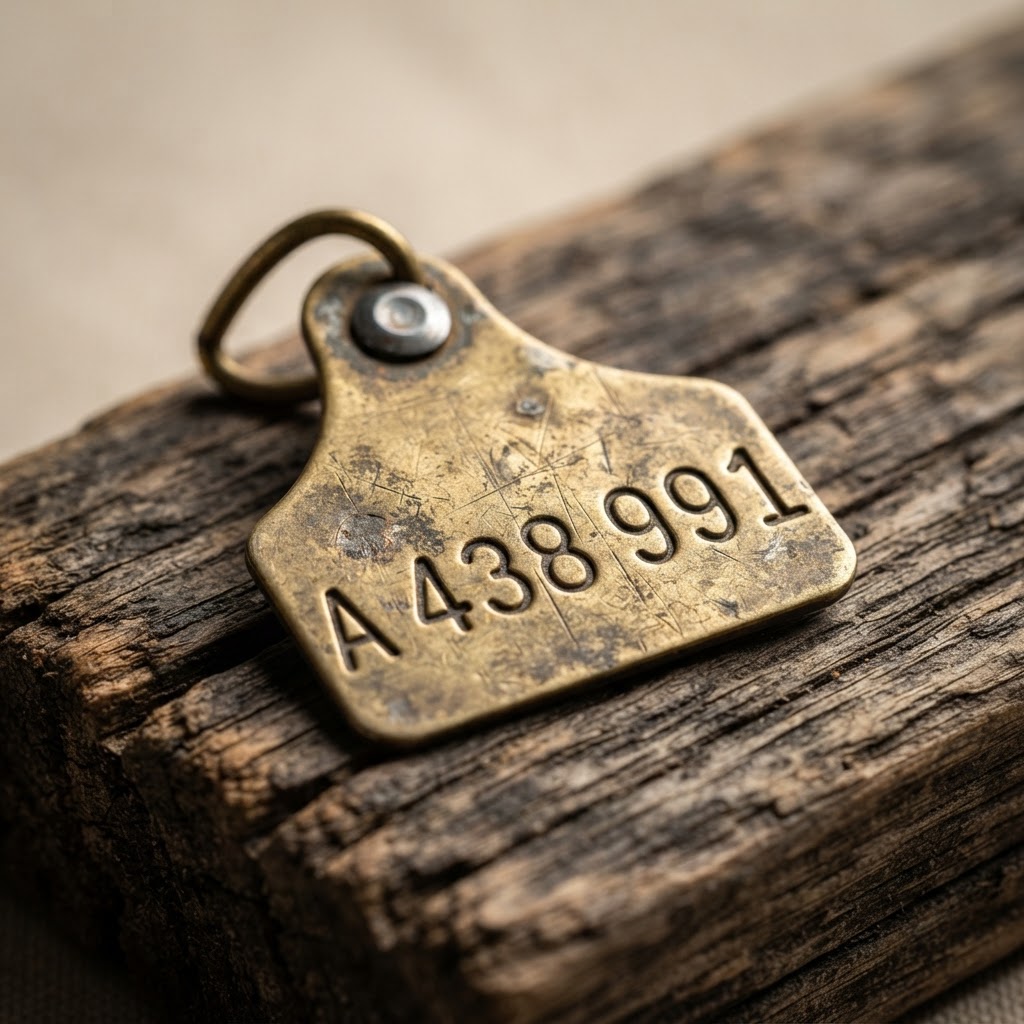
Brass and steel ear tags cost a little more up front, but across a decade of weather, mud and rubbing they are the only identification mark that reliably stays legible. Here is why metal wins for long-term herds.
The quiet problem with temporary identification
Livestock identification is only as reliable as the mark it leaves behind. A tag that fades, cracks, or snaps off after two seasons turns a carefully kept herd record into guesswork, and every lost record is a cost: a missed breeding cycle, a mis-paired pedigree, a vaccine dose given twice or not at all. For short-cycle operations, a plastic ear tag is perfectly adequate. For breeding stock, research animals, and any herd you plan to keep for five, eight, or twelve years, the question is not which tag is cheaper on day one, but which tag is still readable on year ten. Almost always, that tag is metal.
At ORVEXAVET we make both, and we sell both honestly. Plastic tags dominate our volume because most producers rotate stock quickly. But when a customer calls about a long-lived dairy herd, a registered beef operation, or a university research barn, we steer them toward brass and steel. This article explains the engineering behind that recommendation.
What actually destroys an ear tag
Failure in the field is rarely a single catastrophic event. It is the slow accumulation of three forces:
- Ultraviolet light. Sunlight breaks the polymers in plastic over years, turning a flexible tag brittle until it fractures at the attachment point.
- Friction and rubbing. Animals push through gates, scratch against posts, and lie against concrete feed bunks. The tag flexes thousands of times per week.
- Manure, urine, and silage acid. The environment inside a barn or feedlot is chemically aggressive. Plastic absorbs staining and surface etching that slowly obscure printed numbers.
Brass and steel answer all three differently. Metal does not UV-degrade. It does not flex-fatigue the way a thin plastic panel does. And while it can tarnish, a tarnished surface still holds a stamped impression far better than a faded printed surface holds ink. The stamped character is a physical deformation of the material itself, not a coating sitting on top of it.
Stamped versus printed: the difference that matters in year eight
This is the core of the argument. A printed plastic tag carries its information as a layer of ink pressed onto the surface. Wear that surface and the information goes with it. A stamped metal tag carries its information inside the geometry of the metal itself. You can sand it, bury it, or leave it in a manure pack for a winter, and the numbers are still there, pushed into the substrate.
Our Brass Metal Ear Tag — Custom Stamped is produced exactly for this scenario. Each tag is struck with permanent dies, and the resulting characters remain legible long after any print would have faded. For larger bovine ears, the No. 2 Jaw Metal Ear Tag uses a heavier-gauge jaw that resists opening under tension, which is the second most common failure point after surface readability.
If you want to see the trade-off directly, place a Large Plastic Ear Tag — Blank next to a stamped brass tag and flex both by hand. The plastic gives; the metal holds. That is the entire decision in miniature.
Where plastic still wins
None of this means plastic is the wrong choice in general. For a finishing operation where animals exit the herd inside eighteen months, a Small Plastic Ear Tag — Blank is faster to apply, lighter on the ear, cheaper to deploy at scale, and easier to color-code by cohort. Plastic is also the right call when you need to apply tags to very young animals where a heavier metal tag would be disproportionate to the ear. The two materials are tools for two different jobs, and a well-run operation often uses both: plastic for the rotational group, metal for the foundation breeding stock.
The traceability backdrop
There is a regulatory dimension too. Animal disease traceability programs increasingly expect a durable identifier that survives the life of the animal, because a tag that falls off breaks the chain of custody in an investigation. The United States Department of Agriculture maintains its animal-disease traceability framework through USDA APHIS Animal Health, and international animal identification standards are coordinated by the World Organisation for Animal Health (WOAH). Both frameworks rest on the same assumption ORVEXAVET designs around: the identification device must still be readable at the end of the animal's life, not only at the start. A tag that fails the lifetime test fails the traceability test by definition.
Designing for the end of life, not the start
This is why we treat durability as a structural specification rather than a marketing claim. The brass used in our stamped tags is selected for corrosion resistance and impression retention. The jaw geometry of the No. 2 tag is sized so the tag seats without pinching tissue. The attachment point on every metal tag is reinforced against the flex moment where 90% of failures occur. These are small decisions, but the sum of them is the difference between a tag you forget about for a decade and a tag you are re-applying every third season.
If you are already committed to metal for your foundation animals and want to compare specific models, browse the full ear tag line. If you are weighing a mixed strategy, our team is glad to talk through which animals in your herd deserve which tag. And because these are lifetime components, our standard returns policy applies if a tag does not meet the standard you expected on arrival.
The honest summary
Plastic tags are not a mistake. They are the correct tool for short-cycle identification, and we manufacture them in large numbers because our customers need them in large numbers. Metal tags are the correct tool for anything you intend to identify for a long time. The cost difference is real and modest; the durability difference is real and large. When the question is whether a number will still be legible on a breeding cow in her ninth lactation, the answer is stamped brass or steel, every time.
If that matches the kind of herd you run, start with the stamped brass tag above and decide from there. If your cycle is shorter, the plastic line will serve you well and cost you less. Either way, pick the tag that matches the lifetime of the animal in front of you — not the price on the order page.